
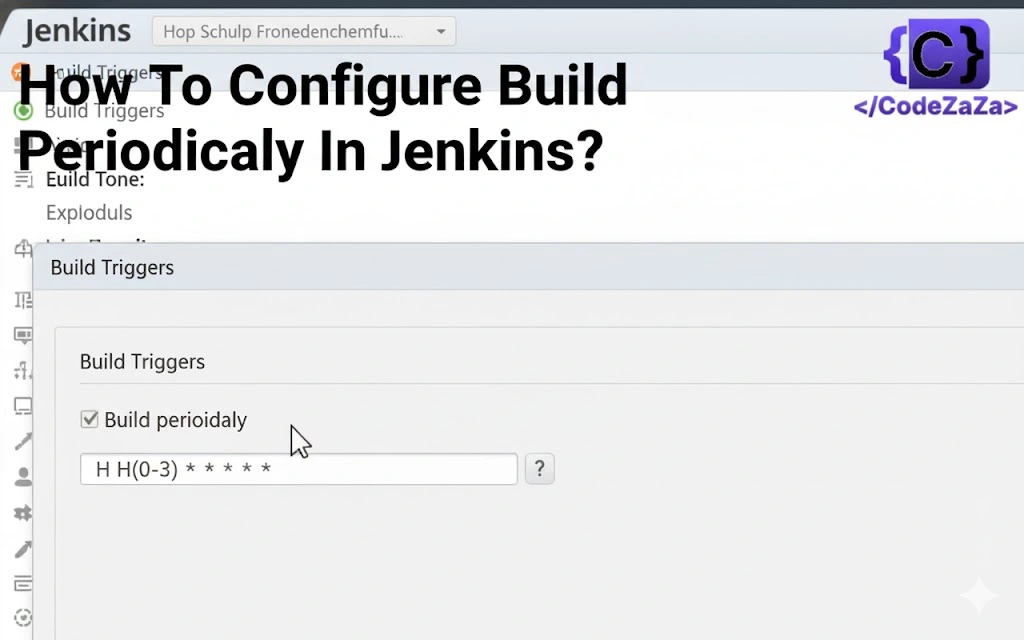
Jenkins is one of the most popular open-source automation servers that help developers build, test, and deploy software applications efficiently. It automates repetitive tasks in the software development lifecycle, enabling faster and more reliable delivery of code changes.
One of the most powerful and flexible features of Jenkins is its ability to schedule builds to run periodically without manual intervention. You can configure Jenkins to automatically trigger jobs at specific intervals — daily, weekly, or even every few minutes — based on your project’s needs.
In this blog, we’ll explore how to configure periodic builds in Jenkins, understand the cron syntax for scheduling, and review real-world examples that show how automation improves build management, testing, and continuous integration pipelines.
Basic Terminologies of Build Scheduling
When you configure a job to run periodically in Jenkins, it’s important to understand a few key terminologies. These concepts explain how and when Jenkins triggers your builds automatically. Below are the four main components of Jenkins build scheduling:
1. Build Trigger
A build trigger defines the event or condition that starts a Jenkins job. For example, a developer might push new code to a repository, make a change in source control (SCM), or set a specific time to start the build. In short, this term explains when Jenkins begins the build process.
2. Trigger Type
A trigger type defines how the build starts. Jenkins supports several trigger types, such as:
- Manual trigger: The user starts the build manually from the Jenkins dashboard.
- Periodic trigger: Jenkins runs builds automatically at scheduled intervals.
- SCM trigger: Jenkins starts the build when it detects changes in the version control system.
- External trigger: Another system or script starts the build using the Jenkins API or a webhook.
Each trigger type fits different automation and integration needs, depending on how you want your pipeline to run.
3. Schedule Builder
The schedule builder offers a simple interface or plugin that helps users define the build schedule visually or through predefined patterns. Some Jenkins plugins make scheduling easier by letting users set complex timing rules without writing cron expressions. This feature helps beginners schedule jobs without needing to learn the syntax in depth.
4. Cron Expression
A cron expression uses a specific syntax to define recurring build schedules in Jenkins. It lets you set the exact time and frequency for job execution — for example, every 15 minutes, every night at midnight, or every Monday morning.
The cron format includes five fields:
Minutes | Hours | Day of Month | Month | Day of Week
Example:
H 0 * * *This expression tells Jenkins to run the build once every hour at a randomized minute (H), which helps balance system load when multiple jobs run simultaneously.
Prerequisites for Configuring Build Periodically in Jenkins
These are the prerequisites that you should follow before configuring the build periodically in Jenkins. Here is the explanation:
- Jenkins Installation: Make sure you already have installed Jenkins and it is running on your server. If you don’t have Jenkins, you can simply install it by visiting their official website.
- Jenkins Project Setup: Create a Jenkins project if you haven’t already created one. You can do this by selecting “New Item” in the Jenkins dashboard and by choosing the appropriate project type like Freestyle project, Pipeline, etc.
- Access to the Jenkins Dashboard: Ensure you have access to the Jenkins web dashboard. You can typically access it through a web browser.
How to Configure Build periodically in Jenkins
Here is the step-by-step guide to configuring build periodically in Jenkins
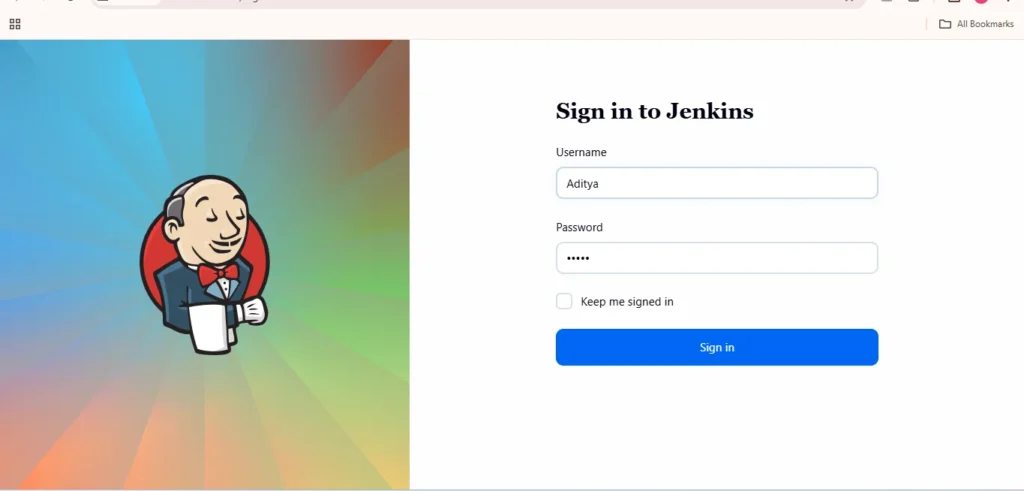
Step 1: Log in to Jenkins Dashboard
This is the first step before proceeding further, You can log in to your Jenkin dashboard using your user ID and password.
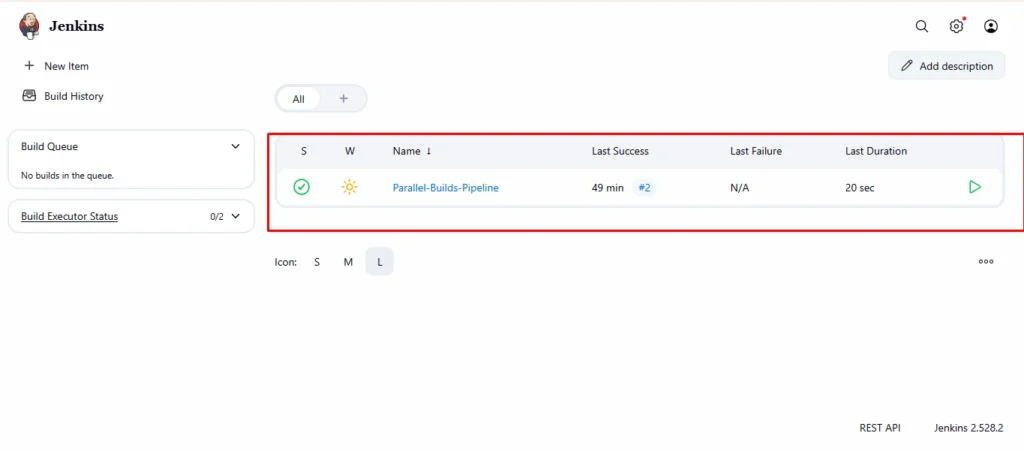
Step 2: Select a Project
Choose the Jenkins project for which you want to configure the periodic build. If you don’t have any project, you can create one by selecting “New Item” and then choosing the project type (e.g. Freestyle project, Pipeline).
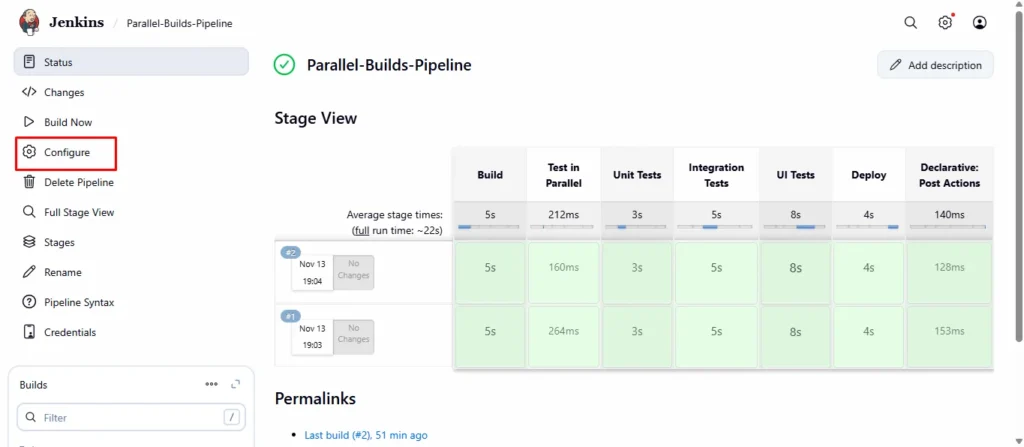
Step 3: Configure Build Triggers
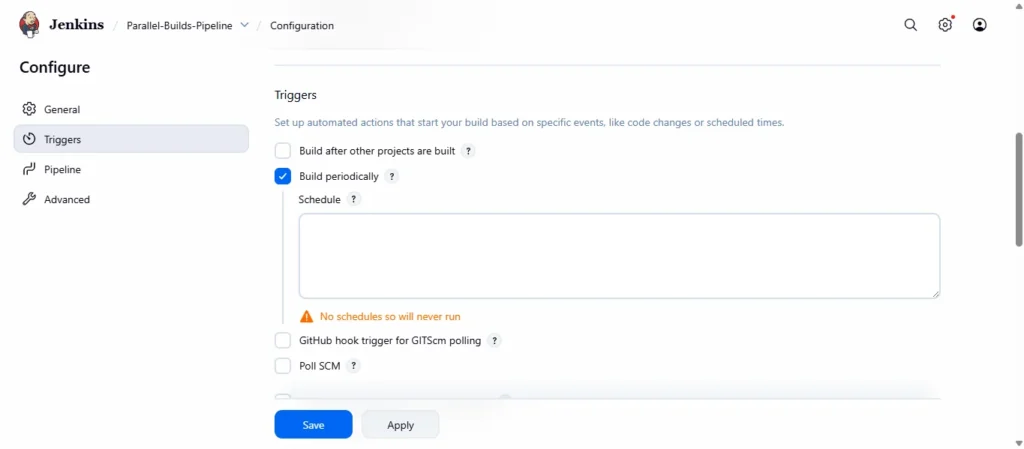
Within your project, first click on the configure tab then find the “Build Triggers” section. Check the “Build periodically” option.
Step 4: Specify the Schedule
In the “Schedule” field, enter the cron expression that will defines when the build should run or in simple words which job will run when. The cron syntax have five fields representing these minute, hour, day of the month, month, and day of the week, respectively.For example: Jenkins provides a helpful “?” character that represent no specific value in the day of the week or day of the month fields.
To schedule build for every minute its cron expression look like this:
*/2 * * * *
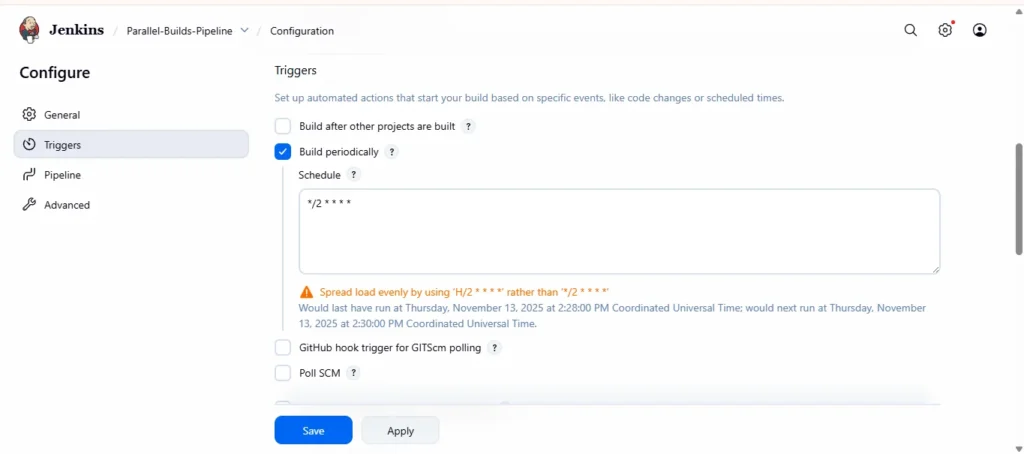
To schedule build for every 5 minute its cron expression look like this:
*/5 * * * *
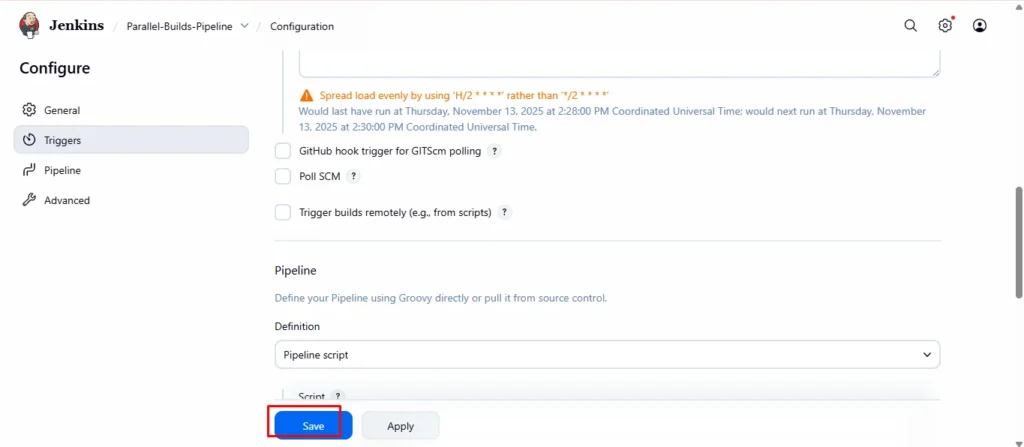
Step 5: Save the Configuration
You can save the configuration by clicking on save button.
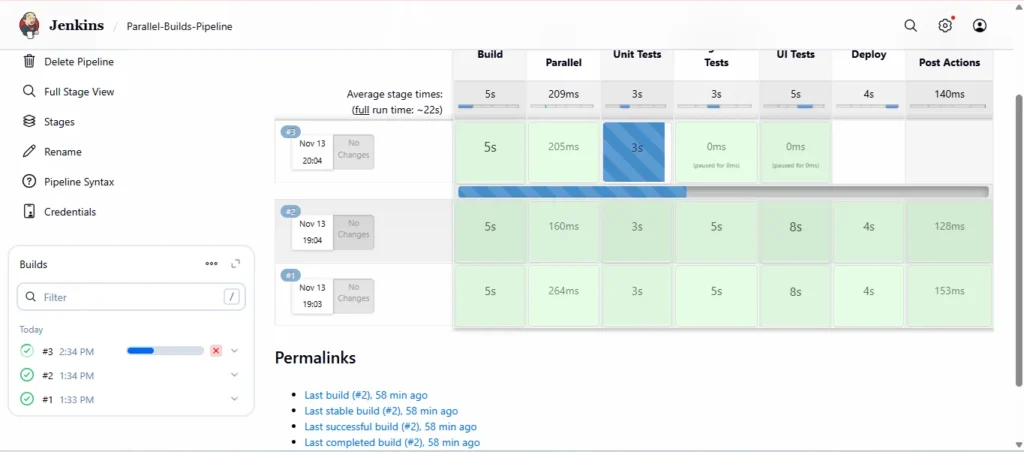
Step 6: Build Log Output
You can now observe the build log output at the scheduled intervals. Jenkins will initiate the build automatically based on the configured schedule.
Example of Cron Expressions
| Schedule | Cron Expression | Description |
|---|---|---|
| Every minute | * * * * * | Run the job every minute. |
| Every hour | 0 * * * * | Run the job at the beginning of every hour. |
| Every day at midnight | 0 0 * * * | Run the job at midnight every day. |
| Every weekday at noon | 0 12 * * 1-5 | Run the job at 12:00 PM, Monday to Friday. |
| Every Sunday at 3:30 AM | 30 3 * * 0 | Run the job at 3:30 AM every Sunday. |
| Every 15 minutes | */15 * * * * | Run the job every 15 minutes. |
| Every Monday and Friday | 0 0 * * 1,5 | Run the job at midnight, Monday and Friday. |
| First day of the month | 0 0 1 * * | Run the job at midnight on the first day of the month. |
| Weekdays at 8 AM and 5 PM | 0 8,17 * * 1-5 | Run the job at 8 AM and 5 PM, Monday to Friday. |
Remember:
These are the some point that you should remember while using corn expression to build periodically in Jenkins:
- You must understand your requirement first before choosing a scheduling method.
- Test your schedules thoroughly to assure that they run as per the expectation.
- You should timely monitor your builds to detect potential issues related to scheduling.
Conclusion
Configuring builds periodically in Jenkins is a powerful feature that make sure that the projects are automatically building at regular interval of time, it reduces manual intervention as most of the work is getting done automatically by machine itself eventually simplifies the process and faster it. By understanding and using cron expressions, You can build or schedule jobs periodically as per the project need easily.